Flutter & the Flutter Engine — Explained in Simple Words
Published on March 01, 2026
What is Flutter?
Flutter is a UI toolkit designed to help developers create beautiful and fast applications. It focuses mainly on the user interface (UI) part of an app, meaning everything users see and interact with on the screen.
One interesting thing about Flutter is that it does not rely on the platform’s native UI components. Instead, Flutter draws every pixel on the screen itself. This gives developers full control over the design and makes the app look the same across different devices.
Some of the main advantages of Flutter include:
Single Codebase
Developers only need to write the code once and it can run on Android, iOS, web, and desktop platforms.
Hot Reload
One of Flutter’s most loved features is Hot Reload. It allows developers to instantly see changes in the app without restarting it, which speeds up development significantly.
Widget-Based Design
In Flutter, everything is built using widgets. Buttons, text, layouts, and even the entire screen are widgets. This makes the UI flexible and easy to customize.
High Performance
Flutter apps run smoothly because they are compiled into native code and rendered using a powerful graphics system.
What is the Flutter Engine?
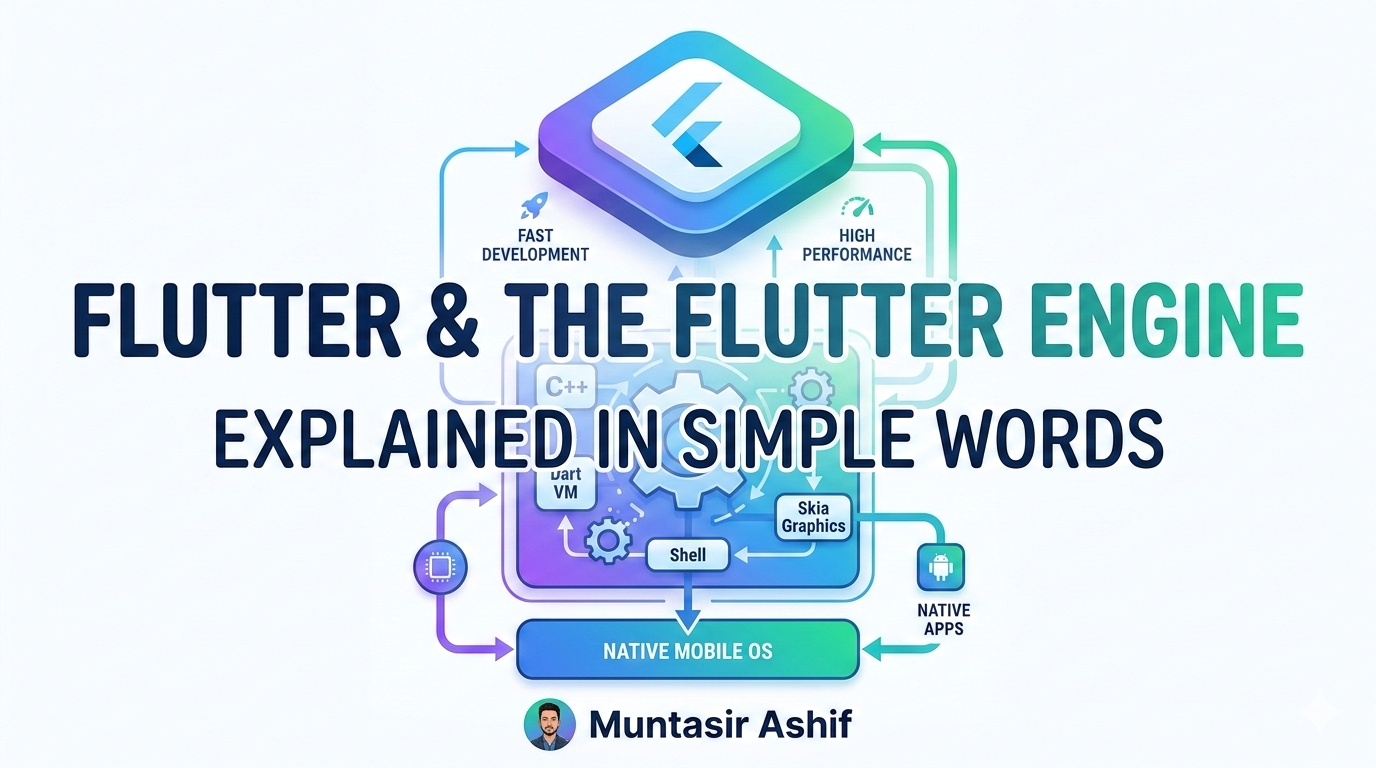
Behind every Flutter application is the Flutter Engine, which is responsible for making everything work properly. The engine is mainly written in C++ and acts as the core runtime for Flutter apps.
The Flutter Engine handles important tasks such as:
- Rendering graphics on the screen
- Managing text layout
- Handling user input
- Communicating with the operating system
In simple terms, the Flutter framework provides the tools for developers to build the app, while the Flutter Engine makes sure the app runs efficiently on different devices.
How the Flutter Engine Works
One of the key technologies used by the Flutter Engine is the Skia graphics library. Skia is also used by popular software like Google Chrome and Android.
Because Flutter uses Skia to render everything directly, it does not depend on the native UI components of the device. This is why Flutter apps maintain consistent design and smooth animations across platforms.
Another important part of the engine is the Dart VM. During development, Dart runs inside this virtual machine, allowing features like Hot Reload to work. When the app is ready for release, the Dart code is compiled into native machine code to improve performance.
The Flutter Engine also uses platform channels to communicate with the operating system. This allows Flutter apps to access device features such as the camera, GPS, sensors, and storage.
Why Developers Love Flutter
Flutter has quickly become one of the most popular frameworks for building modern applications. Many companies choose Flutter because it reduces development time while still delivering high performance and attractive user interfaces.
Companies like Alibaba Group, BMW, and eBay have already used Flutter in real-world products.
For developers, Flutter offers a powerful combination of speed, flexibility, and simplicity.